Help for the injured: the importance of the AVATA Foundation for motorcyclists and traffic victims
September 30, 2025
A traffic accident transforms lives in a matter of seconds. Beyond material damage, victims and their families face physical injuries, endless legal proceedings, psychological scars, and the uncertainty of an uncertain future. Assistance for the injured person is vital.
Of all road users, motorcyclists suffer the most: motorcycles represent freedom and passion, but they are also the greatest vulnerability on the road.
In this context, assistance for accident victims becomes a vital necessity. This concept is not limited to immediate medical care, but involves comprehensive support that encompasses legal, healthcare, psychological, and social aspects. In Spain, the leading organization in this field is the AVATA Foundation for Assistance to Accident Victims , which has supported thousands of traffic victims and their families since 1996.
What does accident assistance mean?
Accident assistance refers to the set of services and resources designed to protect and support those who have suffered an accident. It is not a one-time assistance, but rather a comprehensive process that covers all stages of recovery.
The pillars of assistance to the injured
Medical care and rehabilitation
Immediate hospitalization and specialized diagnosis.
Physiotherapy, neurological rehabilitation, and therapies tailored to each injury.
Legal defense
Expert traffic accident lawyers.
Calculation of fair compensation according to official scale.
Claim for physical, material and psychological damages.
Psychological support
Treatment of anxiety, depression and post-traumatic stress.
Individual and family therapies.
Social and work support
Processing of public aid, disabilities, and pensions.
Adaptation of housing or workplace.
The goal is clear: that no victim feels alone and that each one receives justice and dignity .
AVATA Foundation: History and Mission
The AVATA Foundation for Accident Relief was founded in 1996 , the result of a tragic personal experience. That year, Alejandro and his wife Eva were involved in a traffic accident that struck a poorly placed guardrail , leaving significant physical and emotional scars. That experience not only marked their lives, but also highlighted a harsh reality: in Spain, traffic victims were misinformed, unprotected, and lacked comprehensive support after the accident.
From that mixture of pain, struggle, and solidarity emerged a project with a clear purpose: to ensure that no victim would ever feel alone again . Thus, the AVATA Foundation was born.
The first steps
During its early years, the Foundation operated modestly, focusing on providing guidance to accident victims and their families on medical, legal, and social issues. It gradually gained recognition, and in 2010 , it was officially registered in the Registry of Foundations of the Ministry of Health, Social Services, and Equality , thus consolidating its status as a non-profit, independent, and transparent organization.
Main mission
AVATA's mission is clear and forceful: "To support traffic accident victims and their families throughout the recovery process, defending their rights and improving their quality of life, from the moment of the accident until their social and employment reintegration."
Vision of the future
The Foundation seeks to become the national reference in the defense of victims of trafficking , working not only in direct assistance, but also in prevention, awareness-raising, and road safety education .
Core values
Human commitment. Each victim receives personalized attention.
Transparency. Actions are carried out with clarity and confidence.
Solidarity. Personal pain is transformed into collective aid.
Defense of rights. The injured person is always at the center of the action.
Prevention and education. Reducing accidents is just as important as addressing them.
Important milestones in his career
1996: Origin of the Foundation after the accident of its founders.
Late 1990s: First actions to support victims and disseminate social campaigns.
2005: National expansion, serving cases outside of Castile and León.
2010: Registration in the Ministry of Health's Registry of Foundations.
2015 onwards: Consolidation of its role in prevention campaigns and collaboration with public agencies.
Current events: The AVATA Foundation is recognized as a leading organization in Spain for providing assistance to traffic accident victims, with a special focus on motorcyclists.
What is the Avata Foundation and who does it help?
The Avata Foundation is a Spanish organization dedicated to providing support to people who have suffered a traffic accident. Its work focuses on supporting both victims and their families during critical moments, offering medical, psychological, social, and legal assistance.
When we talk about helping accident victims, the Avata Foundation isn't just talking about a concept, it's about a tangible reality: hundreds of motorcyclists and traffic victims have been able to get their lives back on track thanks to their support.
Injury relief: key services from the Avata Foundation
🏥 Medical and psychological assistance
After a traffic accident, initial medical care is essential, but the subsequent recovery process is equally important. The Avata Foundation offers medical follow-up and psychological support , which is key to overcoming trauma.
⚖️ Legal support and accompaniment in trials
Motorcyclists and drivers involved in accidents often face legal proceedings and insurance claims. This is where the Avata Foundation comes in, providing specialized attorneys and free legal advice.
💪 Rehabilitation and social reintegration
Beyond primary care, the foundation facilitates rehabilitation processes and promotes the employment and social integration of injured people, ensuring they can return to a dignified life.
Why is it so important for motorcyclists?
Motorcyclists are the most vulnerable road users . A motorcycle accident is more likely to result in serious injuries than a car accident.
The Avata Foundation has become an indispensable ally for motorcyclists , because it understands their needs:
Legal support for insurance companies.
Specialized medical follow-up for multiple injuries.
Psychological care focused on emotional recovery.
The motorcyclist: the most fragile victim on the road
Riding a motorcycle is synonymous with freedom, but also with risk. The rider lacks protective bodywork: the helmet and gear are their only shield.
Accident data
More than 25% of road fatalities in Spain are motorcyclists.
In the city, the most common accidents are intersection collisions and distracted rear-end collisions.
On the road, road exits on curves predominate.
The risk of serious injury is four times greater than in a car.
Most common injuries
Fractures in legs and arms.
Head injuries.
Spinal cord injuries.
Internal injuries.
Psychological consequences.
Risk factors
Unprotected guardrails, acting like blades.
Adverse weather: rain, wind or ice.
Lack of visibility in blind spots.
Overconfidence in curves.
How AVATA helps motorcyclists
Claim compensation commensurate with the severity of the injuries.
Manages long and complex rehabilitations.
Offers specific psychological support.
Promotes prevention campaigns aimed at the motorcycling community.
Steps to follow after a traffic or motorcycle accident
An accident can cause confusion and fear, but acting calmly is key. These are the key steps :
1. Ensure safety and mark the area
Activate emergency lights.
Place triangles or V16 device.
Wear a reflective vest.
On a motorcycle, do not move the machine if there is a risk of worsening the situation.
2. Ask for immediate help
Call 112 .
Provide exact location, number of injured, and type of accident.
3. Do not move the seriously injured
Only transfer if there is a life-threatening risk (fire, imminent accident).
Stay calm and accompany the injured person until assistance arrives.
4. Gather evidence
Photographs of the location, damage and position of the vehicles.
Witness and driver data.
A friendly part if there is one.
Keep invoices and receipts for related expenses.
5. Request the police report
Key official document for claims.
Avoid biased versions from the other side.
6. Going to the hospital even if there is no pain
Many injuries appear hours later.
Request a medical report that reflects the link to the accident.
7. Notify the insurance company of the accident
The law requires that this be reported within 7 days .
8. Not accepting the first compensation offer
They are usually low.
Always consult a specialized lawyer.
9. Contact an accident assistance organization
The AVATA Foundation offers free initial guidance.
Coordinates lawyers, doctors and psychologists.
10. Follow medical and legal control
Complete medical check-ups.
Save all documentation.
Maintain contact with the lawyer.
Most common mistakes
Do not call the police.
Don't go to the hospital.
Accept prompt compensation.
Not collecting enough evidence.
Victims' testimonies
In recent years, numerous riders have shared how the Avata Foundation helped them get ahead. From legal advice to recovery therapies, its role has been key in ensuring a second chance.
Juan, a motorcyclist in Madrid: the insurance company offered him €20,000, AVATA got him €65,000 and full rehabilitation.
María, a pedestrian in León: After suffering a fracture, she received a disability pension thanks to the Foundation.
Carlos, a motorcycle delivery driver, overcame his fear of driving after months of psychological therapy managed by AVATA.
Rights of victims of trafficking in Spain
Being involved in a traffic accident not only has physical and emotional consequences: it also opens up a range of legal and assistance rights that every victim should know and demand. However, misinformation often prevents those affected from claiming what they are entitled to. The AVATA Foundation works specifically to ensure that no victim is left unprotected.
1. Right to immediate and free health care
Care in public or private hospitals.
Coverage for emergencies, diagnostic tests, operations, and initial rehabilitation.
2. Right to comprehensive rehabilitation
Access to physical therapy, speech therapy, occupational therapy, and neurological rehabilitation.
Adaptation of prostheses and orthoses.
3. Right to financial compensation
Payment for sick leave days.
Compensation for permanent after-effects.
Compensation for loss of earnings.
Compensation for medical and transportation expenses.
Material damage (vehicle, personal belongings, equipment).
In case of death, compensation to family members.
4. Right to psychological support
Therapies for victims and families.
Treatment of post-traumatic stress and depression.
5. Right to specialized legal guidance
Independent advice to insurance companies.
Legal defense if necessary.
6. Right to social and labor assistance
Pensions for temporary or permanent disability.
Assistance for home or vehicle adaptation.
Job reintegration programs.
7. Right to information and transparency
Clear information about medical and legal processes.
Details of possible compensation.
8. Right to dignity and respect
Humane and empathetic treatment.
Processes free of unnecessary bureaucratic obstacles.
How to calculate compensation after an accident
Main factors
Days of sick leave (hospitalization, disabling, non-disabling).
Degree of disability (temporary or permanent).
Physical and psychological consequences assessed by points.
Medical, pharmaceutical and transportation expenses.
Material damage.
Loss of earnings (income not received).
Death , with compensation for family members.
Practical example
A 40-year-old motorcyclist, 90 days off work (20 hospitalized, 40 disabled, 30 non-disabled), knee sequelae (10 stitches) and loss of wages of €3,000.
The calculation includes:
Days of hospitalization, both disabling and non-disabling × scale.
Value of the sequel × table according to age.
Loss of income.
Medical expenses.
Result: compensation much higher than the insurer's first offer.
Traffic scale
Updated annually:
Value of sick days.
Sequelae points according to age and severity.
Death benefits.
Common mistakes
Do not claim psychological consequences.
Do not include transportation or prosthesis costs.
Relying on quick offers from insurers.
The role of AVATA
AVATA's lawyers rigorously apply the scale, achieving full and fair compensation.
Road safety and prevention: the other side of accident assistance
Assistance to the injured person also includes preventing further victims .
Awareness campaigns
Respect speed limits.
Risks of alcohol and drugs while driving.
Importance of helmet and approved equipment.
Respect the safety distance.
Road safety education
Talks in schools and institutes.
Training in transport companies.
Early awareness of driving responsibility.
Prevention for motorcyclists
Full-face helmet, gloves and protections always.
Check tires and brakes before each ride.
Anticipatory driving to anticipate the maneuvers of others.
Adjust speed to the weather and condition of the asphalt.
Institutional collaboration
Working together with city councils, the DGT (Directorate General of Traffic), hospitals, and security forces.
Data to raise awareness
More than 1,000 people die each year in traffic accidents in Spain.
Motorcyclists = more than 25% of fatalities .
Many accidents could be avoided with prevention and education.
Prevention on trail and adventure routes
Inform someone of the route before leaving.
Bring a reflective vest, first aid kit and tools.
Use geolocators in the mountains.
Know basic first aid.
Foundations and road safety: a vital role in Spain
In Spain, traffic accidents claim thousands of lives each year. The existence of organizations like the Avata Foundation is crucial to complement the work of the public health system and the judicial system , filling gaps left by institutions and insurance companies.
Frequently Asked Questions about the Avata Foundation
1. What does the Avata Foundation do for accident victims? Provides medical, legal, and social support to victims of trafficking, with special attention to motorcyclists.
2. Is Avata support free? Yes, their services are free for victims.
3. How do I contact the Avata Foundation? This can be done through their official website or their branches in Spain.
4. Why is it so important for motorcyclists? Because they are the most exposed users and need specialized support after an accident.
5. Where does the Avata Foundation operate? Throughout the country, collaborating with hospitals, associations, and motorcycle groups.
Assistance for accident victims is not a privilege, it's a right. Motorcyclists and traffic victims find in the AVATA Foundation a key ally, supporting them throughout the entire process: from legal defense to physical and emotional recovery.
👉 If you've been in an accident, contact the AVATA Foundation and receive free guidance starting today.
Descubre qué equipamiento necesita un motorista de aventura para viajar seguro, cómodo y preparado: ropa técnica, protecciones, equipaje, herramientas y accesorios clave.
Las chaquetas de moto Clover son una opción muy interesante para quienes practican trail, viajan en moto o buscan una equipación técnica y segura. En esta guía te explicamos cómo elegir la mejor según tu tipo de conducción y necesidades reales.
Una buena base para comenzar offA pesar de que no acabé todos los ejercicios del
A pesar de que no acabé todos los ejercicios del curso por cuestiones ajenas al organizador/monitor, me pareció muy instructivo como base para afrontar minimamente alguna aventurilla por pista fácil, que era mi objetivo. Repetiré
PerfectoHa sido la primera vez que hemos llevado a
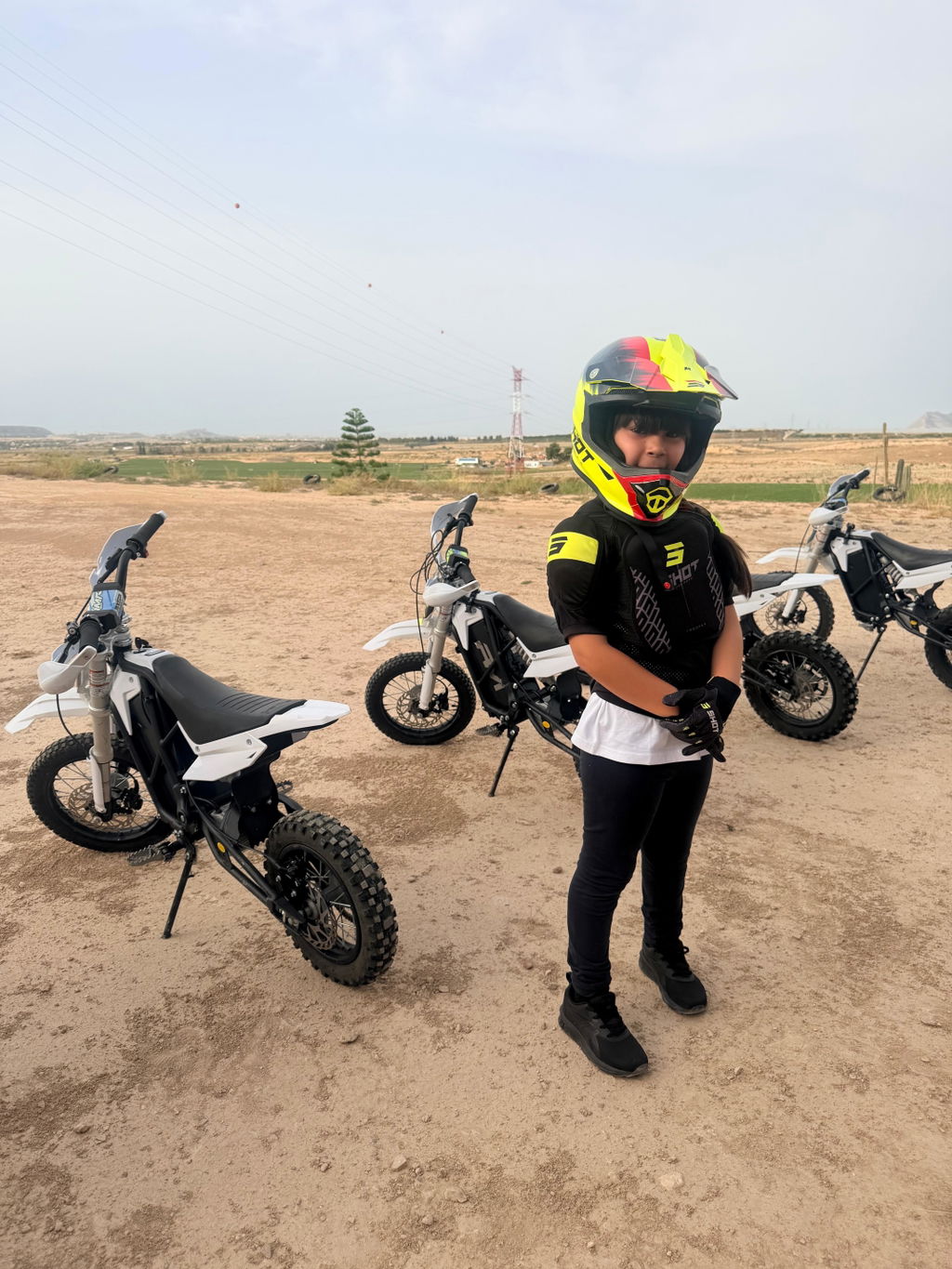
Ha sido la primera vez que he llevado a mi hija. Y le ha encantado, ha salido pidiendo más clases. Así que nos veremos más veces por ahí ! Muchas gracias por la implicación la dedicación y el cariño con el que das las clases. DEFINITIVAMENTE VOLVEREMOS.
A mi peque le encanta, da gusto ver como poco a poco van evolucionando, de empezar dando vueltas y diagonales a realizar lo que mas les gusta... los desafíos de arena, bajadas, troncos, piedras... y viendo como va mejorando su control y como disfruta, es su sábado al mes diferente!
El curso fue una pasada, del principio a final. Javier es un gran profesor y todos los conceptos, tips y correcciones que nos estuvo haciendo nos hace tener mucha más confianza en nosotros mismos y la máquina que tenemos entre las piernas.
Gracias por acercarnos más a una mejor experiencia sobre nuestras motos.